Comparisons
StoryForge vs NovelCrafter: complete pipeline or bring-your-own-AI control?
A practical comparison of StoryForge and NovelCrafter for indie authors choosing between a guided book production pipeline and a flexible AI writing workspace.
StoryForge vs NovelCrafter: complete pipeline or bring-your-own-AI control?
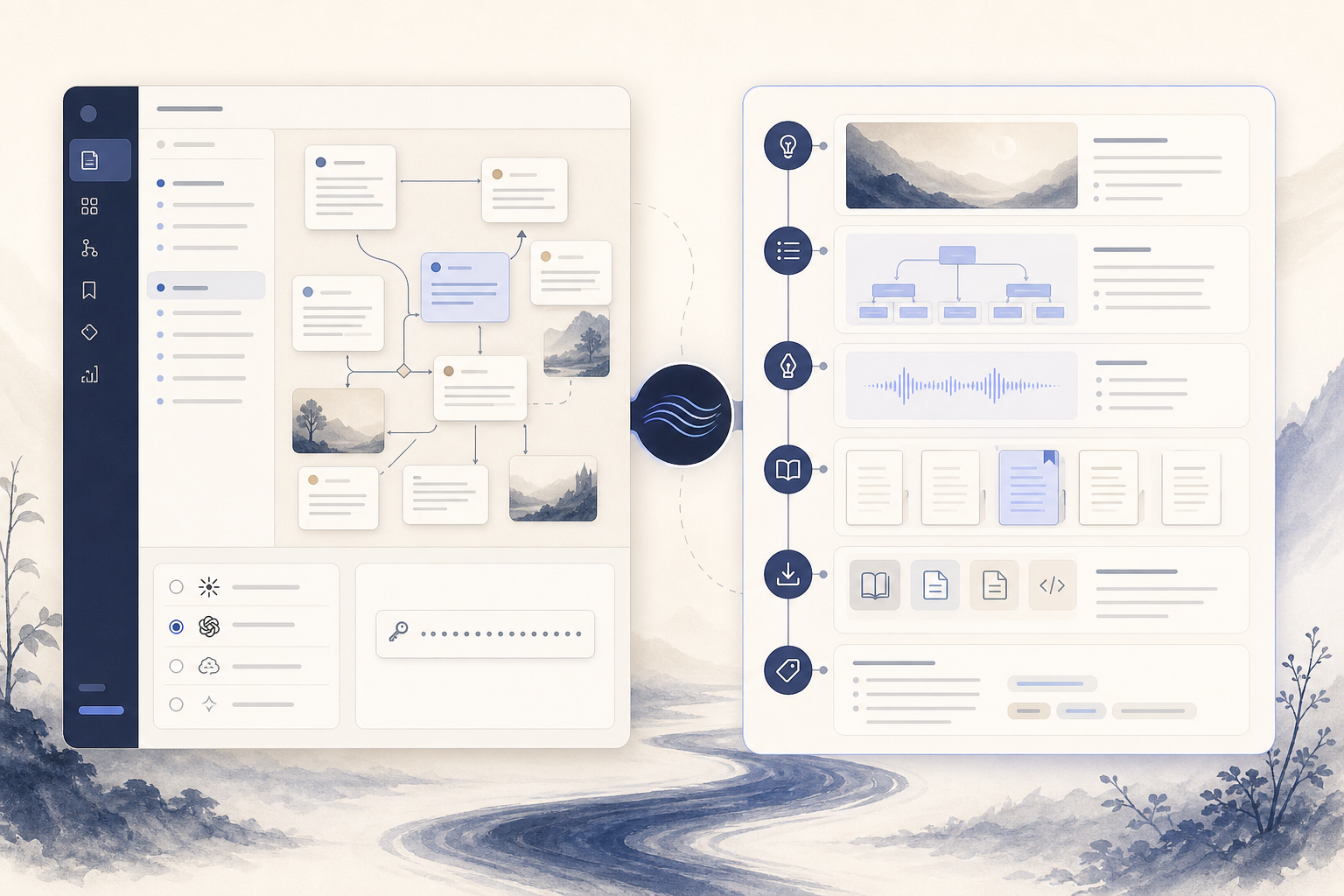
NovelCrafter is one of the strongest tools in the AI fiction stack if you like control.
It gives writers a serious planning surface, a Codex for story knowledge, scene-level structure, custom prompts, and a bring-your-own-key AI model setup. For the right author, that is powerful.
StoryForge is built for a different kind of writer.
If you want to tune the machine yourself, NovelCrafter is worth understanding. If you want the machine to guide you from premise to published novel without asking you to stitch together prompts, APIs, files, and exports, StoryForge is the better fit.
This is not a question of which tool is smarter.
It is a question of how much of the production system you want to operate by hand.
The short version
NovelCrafter is best for authors who want a flexible AI writing workspace.
StoryForge is best for authors who want a guided book production pipeline.
| Question | NovelCrafter | StoryForge |
|---|---|---|
| Best fit | Power users who want control | Authors who want a guided workflow |
| AI setup | Bring your own key and model choices | Built into the product workflow |
| Story memory | Codex and planning tools | Voice and continuity built into production |
| Prompting | Customizable and manual | Productized around the book pipeline |
| Publishing handoff | Author-managed | EPUB and metadata are part of the flow |
The split is simple.
NovelCrafter gives you a workshop.
StoryForge gives you a production line for one book at a time.
Where NovelCrafter is strong
NovelCrafter deserves respect because it understands something most generic AI tools miss: novels need memory.
Its Codex is built to store characters, locations, objects, lore, and other story details. Its planning interface gives writers a place to organize chapters and scenes. Its AI setup lets you choose vendors and models through your own API keys.
That is a real advantage for authors who enjoy systems.
If you are the kind of writer who wants to:
- build your own Codex
- tune prompts
- choose models
- connect external AI vendors
- decide how much context each prompt gets
- keep manual control over the writing process
NovelCrafter may fit you well.
The tradeoff
Control has a cost.
Bring-your-own-key means you are not only buying a writing tool. You are also operating part of the AI stack.
That can be a good thing. Some authors want exactly that.
But a lot of indie authors do not want to become prompt engineers, API cost managers, model testers, and continuity librarians just to publish the next book in a series.
They want to give the system a premise, make the important creative decisions, review the output, and keep moving.
That is the lane StoryForge is built for.
What StoryForge does differently
StoryForge starts from the assumption that the product should own the pipeline.
The workflow is not:
"Here is a flexible writing environment. Go build your process."
The workflow is:
"Here is the path from premise to published novel. Make the creative calls. We will carry the production structure."
That means StoryForge focuses on:
- premise development
- commercial outline structure
- voice definition
- chapter drafting
- voice consistency checks
- revision workflow
- EPUB export
- KDP-ready metadata
The point is not to remove the author. The point is to remove the glue work.
If you are writing book 4 in a KU series, glue work is not cute. It is the thing that eats the week.
The voice and continuity problem
NovelCrafter handles continuity through planning and Codex context. That is a serious approach.
StoryForge takes a more productized route. Voice and continuity are treated as production gates, not just reference material.
The reason is simple: a book can have a great outline and still fall apart in chapter 14.
The prose can drift.
The character can start talking like a different person.
The emotional logic can soften.
The voice can become generic in exactly the way AI fiction gets flagged by readers.
StoryForge is designed to make that drift visible and correctable before the book moves toward export.
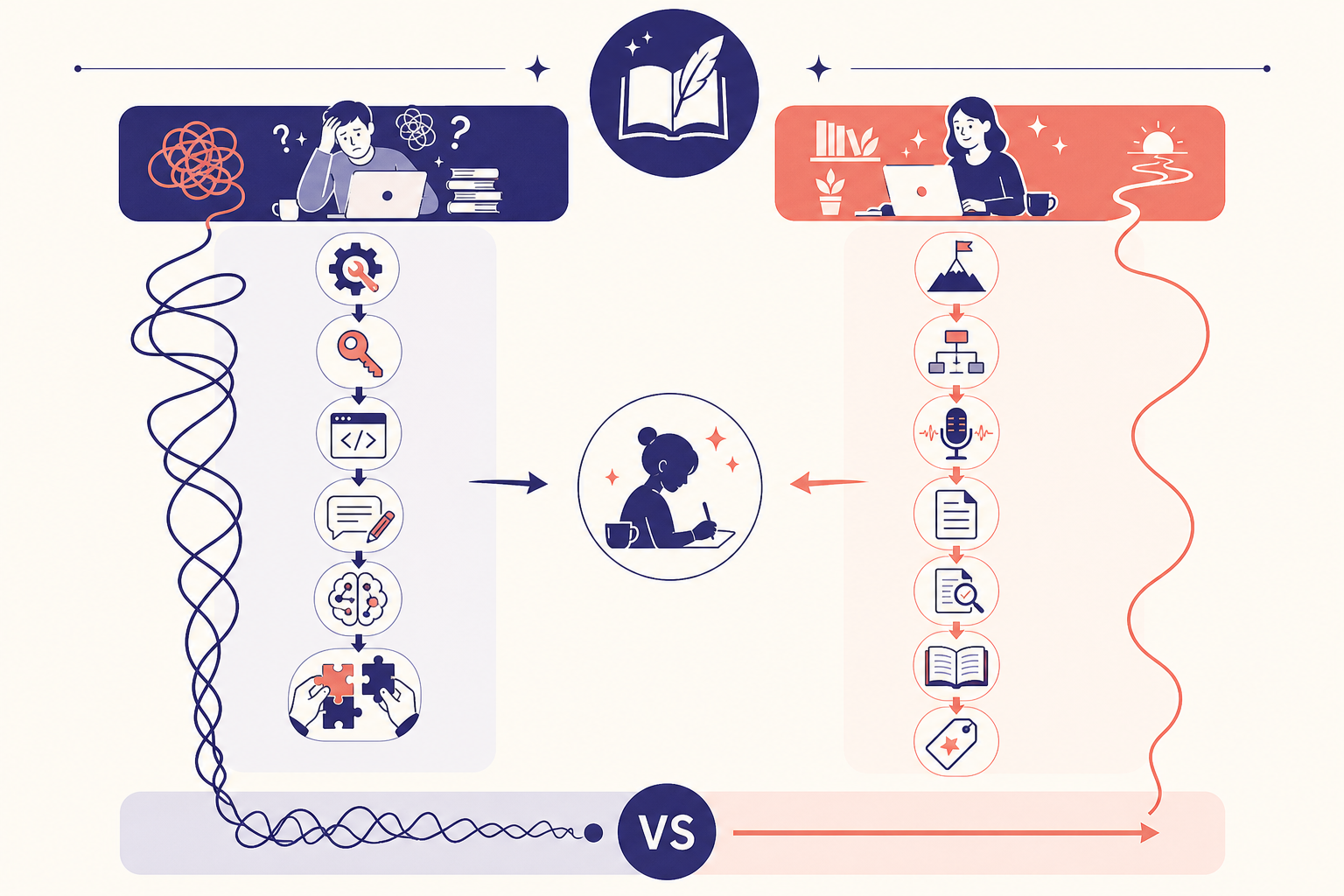
The hidden cost is setup
NovelCrafter's flexibility is part of the appeal.
It is also the hidden cost.
A power user can decide which model to use, when to include Codex context, how to structure prompts, how to manage API costs, and how much manual assembly belongs between scenes.
That is useful if you like building systems.
But some authors are not trying to become system builders. They are trying to publish the next book.
If you already have a prompt library, a clean Codex, model preferences, a revision checklist, and an export workflow, NovelCrafter can give you a serious workspace.
If you do not have those pieces, you may spend the first week building the machine instead of writing the book.
StoryForge makes a different bet. The machine should already exist. The author should spend energy on premise, voice, story choices, and edits, not on which API route should handle the next scene.
Where StoryForge is intentionally less flexible
StoryForge does not try to expose every knob.
That is deliberate.
Indie authors do not get paid for beautiful prompt architecture. They get paid when readers finish the book and want the next one.
So StoryForge narrows the workflow around the steps that matter most:
- get the premise clear
- make the outline usable
- define the voice before drafting
- draft chapters from structured beats
- check voice and continuity before export
- produce the files and metadata needed for launch
There is less room to wander.
That is the point.
The product is built for authors who want leverage, not a second job maintaining the AI stack.
Choose NovelCrafter if
NovelCrafter is probably the better fit if:
- you want maximum control over AI vendors and models
- you already understand API keys or want to learn
- you enjoy building your own prompts
- you want a flexible planning and writing workspace
- you prefer manual assembly over guided production
That is a real segment. Power users will often prefer the workshop.
Choose StoryForge if
StoryForge is probably the better fit if:
- you want a guided path from premise to published novel
- you do not want to bring your own API stack
- you care more about output quality than prompt tinkering
- you want voice consistency checks built into the process
- you want export and metadata in the same system
- you are optimizing for books shipped, not knobs turned
This matters for working indie authors.
The tool should make you faster without turning publishing into a second technical job.
A fair decision rule
Pick NovelCrafter if you want control over the workshop.
Pick StoryForge if you want the whole book pipeline handled in one place.
Both tools understand that novels need structure and memory. The difference is who owns the operational burden.
With NovelCrafter, you can build a powerful custom workflow.
With StoryForge, the workflow is already the product.
Ready to turn a book idea into a publish-ready manuscript?
Start your free trial